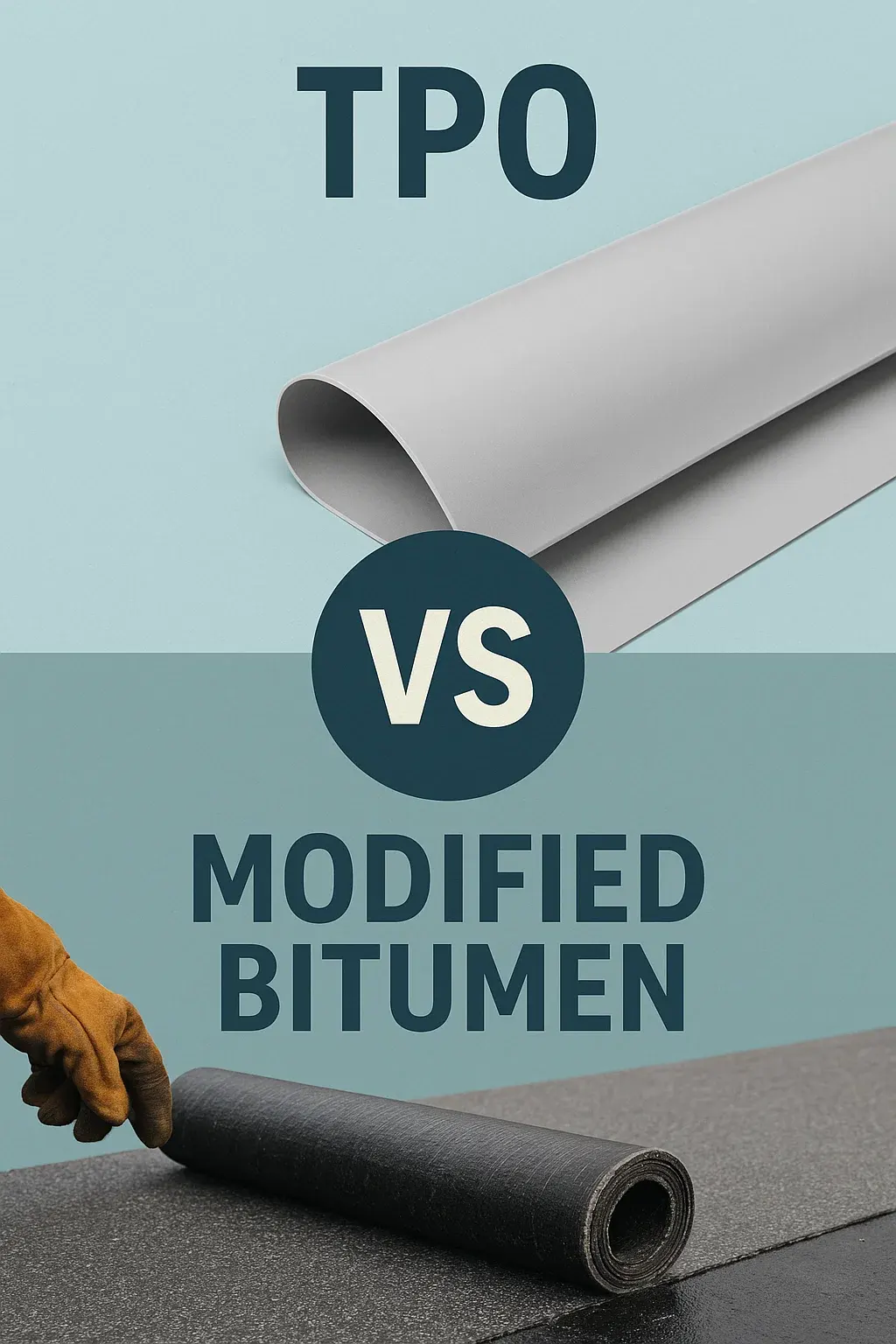
When selecting the ideal roofing system for your low slope or flat roof property, understanding the differences between TPO Vs Modified bitumen roofing is crucial. Both materials offer unique benefits and considerations that can impact your building’s performance and longevity. Learn more in this guide.
TPO Roofing Systems

TPO (Thermoplastic Polyolefin) is a single-ply roofing membrane known for its energy efficiency and ease of installation. Typically white in color, TPO roofs are lightweight and reflect UV rays, contributing to lower cooling costs. They are typically installed using heat-welded seams, providing a watertight seal.
Modified Bitumen Roofing Systems
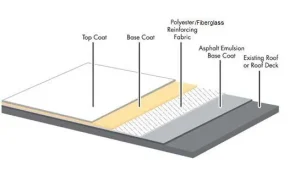
Modified bitumen roofing is an evolutioned multi-layered system that combines asphalt with modifiers like SBS (Styrene-Butadiene-Styrene) or APP (Atactic Polypropylene) to enhance flexibility and durability. It’s known for its robustness and ability to withstand harsh weather conditions and high foot traffic.
Pros and Cons of Modified Bitumen Vs TPO
Advantages for Modified Bitumen:

✔️Durability: Modified bitumen roofs are layers designed for extreme weather protection including hot and cold, heavy foot traffic, and are great to puncture-resistant.
✔️Longevity: With proper maintenance, these roofs can last up to 20-30 years, providing a long-term roofing solution.
✔️Versatility: Suitable for various building types, modified bitumen can be applied using different methods, including torch-down and cold adhesives.
Considerations:
🛑Installation Complexity: The installation process can be labor-intensive and may require specialized equipment and expertise.
🛑Maintenance: Over time, modified bitumen roofs may require more frequent inspections and maintenance to address issues like water blistering or roof cracking.
Advantages for TPO:

✔️Energy Efficiency: The reflective surface of TPO roofs helps in reducing energy consumption by reflecting UV rays.
✔️Ease of Installation: TPO is typically lightweight membrane and can be installed with care quickly, minimizing labor costs.
✔️Durability: TPO is resistant to mold growth, dirt accumulation, and tears, offering a long-lasting roofing solution.
Considerations:
🛑Heat Climate: Prolonged exposure to high temperatures can cause TPO membranes to deteriorate over time.
🛑Longevity: While TPO roofs are durable, their lifespan typically ranges between 15-20 years, which may be shorter compared to other residential and commercial roofing options.
TPO Vs Modified Bitumen Overview
| Feature | TPO Roofing | Modified Bitumen Roofing |
|---|---|---|
| Durability | Offers good resistance to UV rays and chemicals but may be susceptible to punctures if not properly maintained or assessed on inspections. | Highly durable with excellent resistance to work and high foot traffic. Resistance to weather extremes. However, it may be prone to cracking over time. |
| Installation | Lightweight and easier to install, reducing labor costs. Requires skilled technicians for proper seam welding. | Installation is more labor-intensive meaning involve open-flame techniques, necessitating experienced roofing experts. |
| Energy Efficiency | Highly reflective surface reduces cooling costs and contributes to energy savings. | Less reflective than TPO, but reflective coatings can be applied to improve energy efficiency. |
| Maintenance | Requires regular inspections to ensure seams remain intact and to address any punctures promptly. | Generally low maintenance, but detecting leaks can be challenging due to the granular surface. |
| Lifespan | Typically lasts 20–30 years with proper maintenance. | Can last up to 20 years, depending on environmental conditions and maintenance practices. |
| Cost | Generally more cost-effective upfront, with potential energy savings over time. | Consider adding initial installation costs due to labor and materials. |
Conclusion for TPO Vs Modified Bitumen
The popular choice between TPO and Modified Bitumen roofing systems hinges on specific project requirements, budget constraints, and environmental considerations.
💡Opt for TPO Roofing if you prioritize:
-
-
Energy efficiency option with reduced cooling costs.
-
A lightweight and watertight material with easier service installation.
-
A roofing solution suitable for regions with high UV exposure.
-
💡Choose Modified Bitumen Roofing if you require:
-
-
A robust system for heavy foot traffic mainly used in Commercial Buildings.
-
Enhanced durability in extreme weather conditions.
-
A time-tested roofing solution with proven performance.
-
Consulting with a professional roofing contractor can provide further insights tailored to your building’s specific needs, ensuring a roofing system that offers longevity, performance, and value.